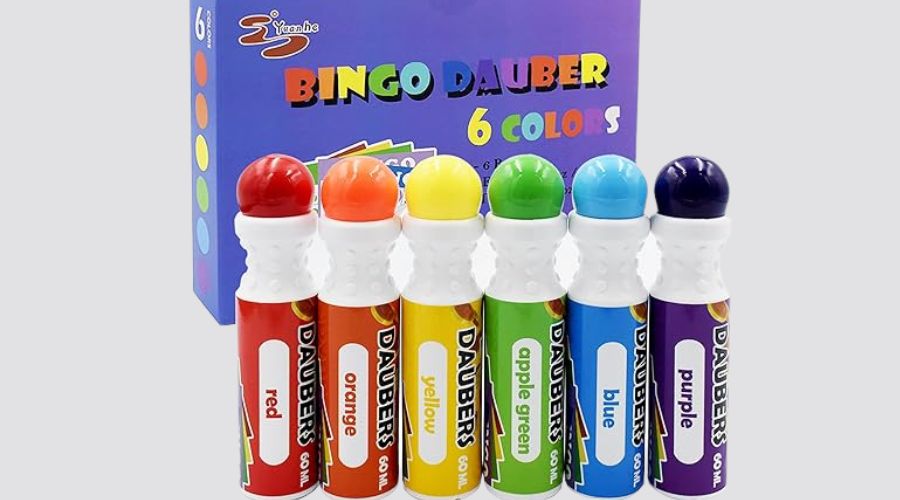
If you’ve ever picked up a bingo dauber and wondered what’s actually inside that colorful barrel, you’re not alone. Understanding what bingo daubers are made of can help you choose better products, troubleshoot ink issues, and feel confident about safety — especially if kids are using them for crafts. As we cover in our complete guide to what bingo daubers are, these simple marking tools have been a staple in bingo halls and classrooms for decades. But their construction involves more thought and engineering than most people realize.
In this detailed breakdown, we’ll look at every component of a bingo dauber — from the plastic body and foam tip to the ink formulation inside. Whether you’re a curious player, a parent buying daubers for art projects, or a crafter looking for the right tool, this guide covers everything you need to know about what kind of ink is in bingo daubers and how all the parts work together.
The Plastic Body: Polyethylene Construction
The outer shell of most bingo daubers is made from high-density polyethylene (HDPE) or similar food-grade plastics. This is the same type of plastic used in milk jugs and shampoo bottles, which tells you a lot about its safety profile.
Manufacturers choose polyethylene for several important reasons. First, it’s lightweight, which matters when you’re holding a dauber for an entire bingo session that can last several hours. Second, it’s resistant to the ink formula inside, meaning the barrel won’t degrade, crack, or leach chemicals into the ink over time. Third, polyethylene is inexpensive to mold, which keeps dauber prices affordable for both halls and individual buyers.
Most dauber bodies are produced through blow molding, a manufacturing process where heated plastic is inflated inside a mold like a balloon. This creates the familiar cylindrical shape with consistent wall thickness. The barrel typically holds between 1.5 and 4 ounces of ink, depending on the brand and size. Some premium daubers use slightly thicker walls or ergonomic contours for a more comfortable grip, but the base material remains the same.
The plastic is usually opaque and dyed to match the ink color inside. This serves a dual purpose: it helps players quickly grab the right color during fast-paced games, and it protects the ink from UV light exposure, which could cause fading or chemical breakdown over time.
The Foam Tip: Polyurethane Open-Cell Design
The business end of a bingo dauber is its foam tip, and this component is arguably the most important part of the entire design. Most quality daubers use open-cell polyurethane foam, which has a sponge-like structure with interconnected pores that allow ink to flow through evenly.
Open-cell foam is critical because it acts as a controlled delivery system. When you press the dauber against paper, the gentle compression squeezes ink through the foam’s network of tiny channels, producing a consistent, round dot. The foam’s density is carefully calibrated — too dense and ink won’t flow freely enough, too porous and it will flood the paper with excess ink.
The tip diameter typically ranges from 15mm to 25mm, with the most common bingo daubers producing dots around 18-20mm in diameter. This size is perfect for marking standard bingo cards without overlapping adjacent numbers. Craft-specific daubers may have smaller or larger tips for different applications.
Over time, the foam tip can become compressed, hardened, or clogged with dried ink. This is why proper storage — with the cap securely in place and the dauber stored tip-down — is essential for longevity. When a dauber stops producing clean marks, the foam tip is usually the culprit rather than the ink running out.
Ink Composition: What Kind of Ink Is in Bingo Daubers?
The ink inside bingo daubers is a water-based formulation that typically contains several key ingredients, each serving a specific purpose:
Water (Solvent Base)
Water makes up the majority of bingo dauber ink — usually 60-80% of the total formula. It serves as the primary solvent that keeps the other ingredients dissolved and flowing smoothly. The water-based nature of the ink is what makes most daubers non-toxic and relatively easy to clean up, a key factor we discuss in our guide on whether bingo daubers are washable.
Dyes and Colorants
The vibrant colors in bingo dauber ink come from synthetic dyes, most commonly FD&C (Food, Drug, and Cosmetic) dyes or D&C dyes. These are the same categories of colorants approved for use in food, cosmetics, and pharmaceuticals. Common dyes include FD&C Blue No. 1, FD&C Red No. 40, and FD&C Yellow No. 5, blended in various ratios to create the full spectrum of available colors.
The dye concentration is carefully balanced. Enough colorant must be present to create a highly visible, opaque mark on paper, but too much dye increases the risk of staining skin and clothing. Most manufacturers aim for a concentration that produces a bold mark that’s easily visible under bingo hall lighting conditions.
Glycerin (Humectant)
Glycerin is a thick, colorless liquid that serves as a humectant — a substance that attracts and retains moisture. In bingo dauber ink, glycerin prevents the formula from drying out too quickly, both inside the barrel and on the foam tip. It also gives the ink a slightly viscous consistency that helps it flow evenly without dripping or running on paper.
Preservatives
Because the ink is water-based, it needs preservatives to prevent bacterial and fungal growth. Common preservatives used in dauber ink include phenoxyethanol, sodium benzoate, and potassium sorbate. These are the same preservatives found in many cosmetics and personal care products, chosen because they’re effective at low concentrations and have well-established safety profiles.
Surfactants
Surfactants (surface-active agents) reduce the surface tension of the ink, helping it spread evenly through the foam tip and onto paper. Without surfactants, the ink might bead up on the foam or produce uneven, blotchy marks. A small amount of surfactant ensures each dab creates a uniform, round dot with consistent color density from edge to edge.
Different Ink Types: Standard vs. Specialty Formulas
Not all bingo dauber inks are created equal. The market offers several specialty formulations beyond the standard ink:
Standard Ink
This is the classic formula described above — water, dyes, glycerin, preservatives, and surfactants. Standard ink daubers are the most common, least expensive, and most widely available. They produce clean, bold marks in a wide range of colors and are suitable for both bingo play and general craft use.
Glitter Ink
Glitter daubers add fine metallic or holographic particles to the standard ink formula. These particles are usually made from polyester film (PET) cut into microscopic flakes. The glitter is suspended in the ink and deposited along with the color when you dab. Glitter daubers are especially popular for craft projects, children’s art activities, and among bingo players who want their cards to sparkle. The glitter particles can sometimes cause the foam tip to clog faster than standard ink, so these daubers may have a slightly shorter lifespan.
Scented Ink
Scented bingo daubers include fragrance compounds mixed into the ink formula. Common scents include fruit fragrances like grape, cherry, and blueberry, as well as novelty scents like cotton candy or bubblegum. The fragrances are typically synthetic and added in small concentrations. Scented daubers are popular with children and add a fun sensory element to crafting. However, people with fragrance sensitivities should be aware that these daubers release scent during use.
UV/Blacklight Ink
Some specialty daubers contain fluorescent dyes that glow under ultraviolet (blacklight) lighting. These use fluorescent brightening agents in addition to or instead of standard dyes. They’re popular for special bingo events, Halloween parties, and creative art projects.
The Cap: More Than Just a Cover
The cap of a bingo dauber is a simple but essential component. Most caps are made from the same polyethylene plastic as the body and are designed for a friction fit — snug enough to seal in moisture but easy enough to remove quickly during play.
The cap’s inner surface often includes a small ridge or lip that presses against the foam tip when sealed. This creates an airtight barrier that prevents the ink from drying out between uses. Some premium brands use a slightly softer plastic or rubber gasket inside the cap for a better seal.
Cap design might seem trivial, but it directly affects the dauber’s shelf life. A dauber with a well-designed cap can remain usable for months or even years when stored properly, while a loose-fitting cap will allow the ink to evaporate and the foam tip to harden within weeks.
Quality Differences Between Brands
While the basic components are similar across brands, quality varies significantly. Premium daubers from established brands like 4 oz. Dab-O-Ink or Sunsational use higher-quality foam tips with more consistent pore structures, better-calibrated ink viscosity, and more durable plastic bodies.
Budget daubers, particularly some imports, may use lower-grade foam that clogs more quickly, thinner ink that produces faded marks, or plastic that becomes brittle over time. For buying the best quality daubers, sticking with established brands from reputable sellers is always the safest bet.
Understanding what bingo daubers are made of helps you make smarter purchasing decisions and get the most out of every dauber. Whether you’re marking cards at your local bingo hall or setting up a crafting station for kids, the combination of polyethylene, polyurethane foam, and water-based ink creates a tool that’s safe, effective, and remarkably well-designed for its purpose. For a broader overview of these versatile tools, revisit our guide on what bingo daubers are and how they fit into the world of bingo and beyond.
Frequently Asked Questions
What kind of ink is in bingo daubers?
Bingo daubers contain water-based ink made primarily from water, synthetic dyes (usually FD&C-approved colorants), glycerin to prevent drying, preservatives to inhibit bacterial growth, and surfactants for even ink flow. The formula is specifically designed to be non-toxic and produce highly visible marks on paper.
Are the materials in bingo daubers safe for children?
Yes, the materials used in quality bingo daubers are generally safe for children. The plastic body is food-grade polyethylene, and the ink is water-based using dyes approved for use in food and cosmetics. However, children should always be supervised to prevent ink ingestion and to avoid staining clothes and surfaces.
Why does my bingo dauber stop working even though it still has ink?
The most common reason is a dried or clogged foam tip. The open-cell polyurethane foam can become hardened if the cap is left off or doesn’t seal properly. Dried ink blocks the tiny channels in the foam, preventing fresh ink from flowing through. Storing your dauber tip-down with the cap securely in place helps prevent this problem.
What makes glitter bingo daubers different from regular ones?
Glitter daubers use the same base ink formula but add fine polyester (PET) glitter particles suspended in the liquid. These tiny metallic or holographic flakes are deposited along with the ink when you dab. The glitter particles can cause the foam tip to clog faster than standard ink, so glitter daubers may not last as long as regular ones.
Can I refill a bingo dauber with different ink?
While some people do refill daubers, it’s generally not recommended. The ink formula is specifically calibrated for the foam tip’s pore structure, and using different ink — such as craft paint or fountain pen ink — can clog the foam, produce inconsistent marks, or damage the plastic barrel. If you need more ink, purchasing a new dauber is usually more reliable and cost-effective.