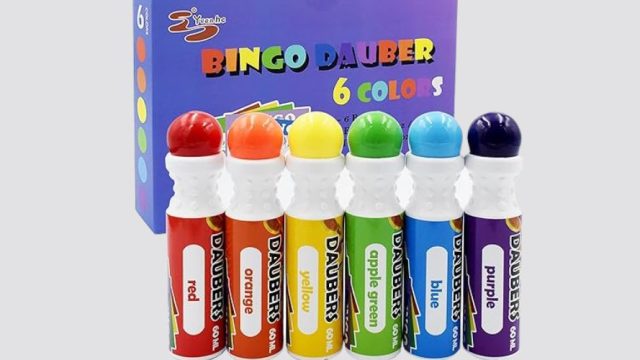
What Exactly Is a Bingo Dauber?
A bingo dauber is a specialized ink applicator designed for marking numbers on bingo cards during gameplay. Sometimes called a bingo marker, bingo dabber, or simply a dauber, this tool has become synonymous with the game of bingo itself. If you have ever walked into a bingo hall, you have almost certainly seen rows of colorful daubers lined up alongside stacks of paper bingo cards, ready for action.
At its core, a bingo dauber consists of three main components: a plastic bottle body that serves as an ink reservoir, a sponge-tipped applicator at one end, and a snap-on or screw-on cap to prevent the ink from drying out. The sponge tip is typically round, producing a clean circular mark that fits neatly within the squares of a standard bingo card. Most daubers create a dot roughly 15 to 20 millimeters in diameter, which is the ideal size for covering a single number on a regulation bingo sheet without bleeding into adjacent squares.
What sets bingo daubers apart from ordinary markers or highlighters is their purpose-built design. Unlike a felt-tip marker that drags across paper, a dauber is meant to be pressed straight down in a quick stamping motion. The sponge tip absorbs and holds a consistent amount of ink, so every dab produces a mark of the same size and intensity. This allows players to mark their cards rapidly and accurately during fast-paced games where numbers are called in quick succession.
The ink inside a bingo dauber is almost always water-based and non-toxic, formulated to be translucent rather than opaque. This translucency is critical because players need to see the printed number through the ink mark. If the ink were opaque, it would cover the number entirely, making card verification impossible after a win is called.
Daubers have been part of bingo culture since the mid-twentieth century. Before their invention, players used dried beans, small discs, or coins to cover called numbers. The shift to ink daubers represented a major improvement because the marks are permanent on the card, meaning pieces cannot accidentally slide off or be bumped out of place during play. Today, daubers are so closely associated with bingo that many halls include one free with the purchase of a card pack, and seasoned players often bring their own collection of favorite colors and styles to every session.
How Do Bingo Daubers Work?
Understanding how bingo daubers work reveals a surprisingly elegant piece of everyday engineering. Knowing how to use bingo daubers properly starts with understanding the mechanics at play inside every dauber.
The plastic bottle body acts as a reservoir, holding anywhere from 40 to 120 milliliters of ink depending on the dauber size. The ink sits inside the bottle under normal atmospheric pressure, and the sponge tip at the open end acts as both a valve and an applicator.
The sponge tip is made from porous polyurethane foam cut into a cylindrical or dome shape. This foam is saturated with ink through capillary action, the same physical principle that allows a paper towel to soak up a spill. As ink is used from the surface of the sponge, more ink is drawn up from the reservoir through the narrow neck of the bottle. Gravity assists as well, since most players hold their daubers tip-down, allowing ink to flow naturally toward the sponge.
When you press the dauber tip against a bingo card, you compress the sponge slightly. This compression forces ink out of the tiny pores and transfers it onto the paper. When you lift the dauber away, the sponge springs back and begins wicking more ink from the reservoir. The entire dab takes less than a second, and a well-made dauber produces a clean, round mark every time.
Bingo ink is formulated to be thin enough to flow through the sponge easily but thick enough not to drip when held tip-down. This balance means the dauber is always ready without requiring shaking or priming. You simply uncap it and start dabbing. Most quality daubers produce between 1,000 and 3,000 individual dabs before the ink runs out, depending on pressing firmness and paper absorbency. Over time, the sponge tip may become slightly compressed from repeated use, but many experienced players actually prefer a broken-in tip because it produces a more controlled mark.
Types of Bingo Daubers
The world of bingo daubers extends far beyond basic models. Manufacturers have developed a wide variety of dauber types to suit different preferences, playing styles, and occasions.
Standard Bingo Daubers
The standard bingo dauber is the workhorse of any bingo hall. These daubers typically hold about 80 milliliters of ink and feature a sponge tip producing a dot roughly 15 to 18 millimeters in diameter. They stand approximately 10 to 13 centimeters tall with a comfortable barrel that fits easily in one hand. Standard daubers come in every popular color, including red, blue, green, purple, orange, and pink. Bingo supply companies sell them in bulk packs, making them an affordable choice for halls and regular players alike.
Mini Bingo Daubers
Mini daubers are scaled-down versions holding around 40 milliliters of ink. They are popular with players who like to use multiple colors during a single game, as their smaller size makes it easy to keep several within reach. Mini daubers are also a favorite for children’s bingo because they fit comfortably in smaller hands while producing marks just as clean as their full-sized counterparts.
Jumbo Bingo Daubers
Jumbo daubers cater to players who want maximum ink capacity and a larger grip. Holding up to 120 milliliters of ink, the wider barrel is particularly comfortable for players with arthritis or hand mobility issues. They are also practical for marathon sessions where running out of ink mid-game would be inconvenient.
Glitter Bingo Daubers
Glitter daubers contain ink mixed with fine glitter particles that shimmer on the bingo card. They function identically to standard daubers but are especially popular at themed bingo nights, holiday events, and fundraiser games. The glitter is suspended evenly in the ink for consistent distribution with each dab.
Scented Bingo Daubers
Scented daubers feature ink infused with fragrances such as grape, cherry, vanilla, or bubblegum. Each color typically corresponds to a particular scent, making them fun and distinctive. They are especially popular with younger players and at family-friendly events.
Novelty and Specialty Bingo Daubers
Novelty daubers encompass creative designs shaped like animals, cartoon characters, or holiday icons. Some feature LED lights that flash when pressed, while others glow in the dark or include built-in good-luck charms. These make excellent gifts for bingo enthusiasts and can be found through various retailers. For guidance on where to find specialty and standard daubers, visit our comprehensive guide to where to buy bingo daubers.
What Are Bingo Daubers Made Of?
The construction of a bingo dauber involves several carefully chosen materials, each selected for durability, safety, and performance.
The outer body is made from polyethylene or polypropylene plastic, both lightweight, durable, and resistant to the ink stored inside. These are the same food-grade plastics used in beverage containers. The body is typically molded in a single piece with a narrow neck where the sponge tip is fitted. Some manufacturers use semi-transparent plastic so players can monitor remaining ink levels.
The sponge tip is crafted from polyurethane foam, an open-cell material that excels at absorbing and releasing liquids. The foam is die-cut into precise cylindrical shapes and fitted snugly into the bottle neck. The density and pore size are carefully controlled: too porous and the tip releases too much ink, creating blotchy marks; too dense and ink transfer becomes faint and incomplete.
The ink is a water-based, non-toxic formulation containing water as the primary solvent, water-soluble dyes for color, a small amount of preservative to prevent microbial growth, and trace surfactant to help ink flow evenly through the sponge. Because the dyes are water-soluble, marks can usually be removed from skin and most fabrics with soap and water, though some colors may stain porous surfaces if untreated.
For a deeper exploration of every material in a bingo dauber, including ink chemistry and safety certifications, read our dedicated article on what bingo daubers are made of.
The cap creates an airtight seal over the sponge tip to prevent drying between uses. A well-sealed cap keeps a dauber fresh for months or even years of intermittent use. Some caps also include a clip for attaching the dauber to a pocket or bingo bag, adding convenience for players on the go.
Bingo Daubers vs Other Marking Methods
While bingo daubers have become the dominant way to mark bingo cards, they are not the only method available. Comparing alternatives highlights why daubers have earned their place as the preferred choice for most players.
Bingo Daubers vs Bingo Chips: Before ink daubers became widespread, bingo chips were the standard. These small plastic or cardboard discs are placed over called numbers. Chips are reusable, but they can be accidentally knocked off the card, must be removed one by one between games, and are too slow for fast-paced play. Daubers solve all these problems by making a permanent, instant mark.
Bingo Daubers vs Sliding Window Cards: Shutter cards feature built-in plastic sliders that cover each number when called. They are reusable and require no separate tool, making them popular on cruise ships and for travel bingo. However, they are significantly more expensive than paper cards and daubers, and the sliding mechanisms can jam over time. For high-volume bingo halls, disposable cards with daubers remain far more economical.
Bingo Daubers vs Crayons or Pencils: Some informal games use crayons or pencils. While readily available, they are far slower than daubers. Drawing an X or circling a number requires more time and attention than a quick dab. They also produce marks that are harder to read at a glance during card verification.
Bingo Daubers vs Regular Markers: Standard felt-tip markers might seem like a reasonable substitute, but they fall short in practice. Their tips are designed for drawing lines, not stamping dots, producing uneven or streaky marks. Most marker inks are opaque, which obscures printed numbers and makes card verification difficult. Regular markers also dry out faster because they lack the sealed reservoir system that keeps dauber sponge tips saturated. A bingo dauber is specifically engineered for the rapid dab-and-lift motion of the game, and no general-purpose marker can match that specialization. For those looking for similar tools for craft purposes, our article on bingo dauber alternatives explores several options.
Are Bingo Daubers Safe?
Safety is a common concern, especially for parents who want to use bingo daubers with children. The good news is that daubers are manufactured with safety as a top priority and are widely regarded as safe for all ages when used as intended.
The ink in virtually all commercially available bingo daubers is water-based and non-toxic. Major manufacturers formulate their inks to comply with ASTM D-4236, the standard practice for labeling art materials with chronic health hazards. Products meeting this standard have been evaluated by a qualified toxicologist and determined to pose no known chronic health risks. Many daubers also carry the AP (Approved Product) seal from the Art and Creative Materials Institute.
For a thorough examination of dauber ink ingredients and toxicology, read our detailed guide on whether bingo daubers are toxic. The short answer is that incidental skin contact and the small amounts a child might encounter during normal play are not considered hazardous.
Because bingo dauber ink is water-based, it is generally washable from skin and many fabrics. However, vivid dyes can sometimes leave temporary stains on light-colored clothing or porous surfaces. We have put together a comprehensive resource on whether bingo daubers are washable that covers removal techniques for every common surface and fabric.
Children use bingo daubers safely in schools, daycare centers, and therapy settings every day. The large barrel is easy for small hands to grip, and the press-and-lift motion is intuitive even for toddlers. Supervision is recommended primarily to manage mess, not due to safety concerns with the product itself. Players with skin sensitivities should note that allergic reactions to dauber ink are extremely rare, but testing a small amount on the inner wrist before extended use is a sensible precaution if you have known dye sensitivities.
Creative Uses Beyond Bingo
Bingo daubers have found a vibrant second life as versatile tools for art, education, and decoration well beyond the bingo hall.
Art Projects and Crafts: Daubers are popular in the crafting community for projects calling for bold, colorful dots. Artists use them for pointillist-style paintings, pattern designs, and decorative backgrounds. The consistent dot size makes them excellent for repetitive patterns, and the translucent ink allows layering effects when colors overlap. They are also used in card-making, scrapbooking, and mixed-media art.
Children’s Education: Teachers and parents have embraced daubers as learning tools. Dauber activity sheets feature exercises combining the fun of stamping with lessons in letter recognition, number counting, and color identification. Pressing a dauber to mark specific spots on worksheets develops hand-eye coordination and fine motor skills needed for later handwriting. The large barrel is perfectly suited for preschool-aged children.
Car Window Decoration: An increasingly popular use for bingo daubers is decorating car windows for celebrations and sporting events. The water-based ink adheres well to glass and creates eye-catching designs visible from a distance. Our guide on using bingo daubers on car windows covers the best techniques and how to clean the ink off afterward.
Party and Event Activities: Daubers make excellent additions to party activity stations, especially for children’s birthdays. They work well for do-a-dot art, custom themed bingo games, and collaborative group art projects.
Therapeutic Applications: Occupational therapists use daubers in sessions for both children and adults. The pressing motion exercises hand and finger strength, while aiming at specific targets builds precision and coordination. For elderly patients working to maintain hand dexterity, dauber activities provide a low-impact, enjoyable form of exercise that feels more like play than therapy.
For more ideas on similar tools for art and education, explore our guide to bingo dauber alternatives comparing daubers with dot markers and other stamping tools.
Where to Buy Bingo Daubers
Finding bingo daubers is easier than ever, with numerous retail and online options for every budget. Daubers are sold at major retailers including Walmart, Target, and Dollar Tree, as well as specialty bingo supply shops. Online marketplaces like Amazon offer enormous selections from economy packs to premium novelty daubers, and dedicated bingo supply websites provide attractive bulk pricing for organizations running regular events.
When shopping, consider factors such as ink volume, tip size, color selection, and whether you want specialty features like glitter, scent, or novelty designs. The price per dauber decreases significantly when buying in bulk, so multi-packs offer the best value for regular players and organizations that host frequent bingo nights.
For a comprehensive breakdown of every major retailer, price comparisons, and tailored recommendations, visit our complete Where to Buy Bingo Daubers guide covering brick-and-mortar stores, online retailers, wholesale suppliers, and specialty shops.
Frequently Asked Questions
What is a dauber in bingo?
A dauber in bingo is the ink-filled marker tool that players use to mark called numbers on their bingo cards. It features a round sponge tip that creates a clean, circular dot when pressed against the card. The term comes from the action of daubing, meaning to press or stamp lightly. Daubers are also called dabbers, bingo markers, or dot markers in some regions. They are the standard marking tool in bingo halls worldwide, having replaced older methods like chips and tokens for their speed and reliability.
Are bingo dauber marks permanent?
Bingo dauber marks are permanent on paper, which is intentional since marks need to stay in place for game verification. On non-porous surfaces like glass, plastic, and laminated materials, the water-based ink can usually be wiped away with a damp cloth. On skin, it washes off with soap and water, though vivid colors may leave a faint tint that fades within a day. On fabric, prompt treatment with cold water and detergent often removes the ink, but set-in stains may be more stubborn. For detailed cleaning guidance, check our article on whether bingo daubers are washable.
Can kids use bingo daubers?
Yes, bingo daubers are widely used by children in schools, daycare centers, and at home. The ink is non-toxic and water-based, meeting safety standards applied to children’s art supplies. The large barrel is easier for small hands to grip than crayons or markers, and the press-and-stamp motion is intuitive for children as young as two. Daubers are commonly used for educational activities including alphabet worksheets, counting exercises, and color recognition games. Adult supervision is recommended primarily to manage mess.
How long does a bingo dauber last?
A standard 80-milliliter dauber provides between 1,000 and 3,000 dabs, translating to roughly 10 to 30 games when playing multiple cards per session. A casual player attending weekly bingo can expect a single dauber to last a month or more. Unopened daubers stored at room temperature remain usable for two to three years. Keeping the cap tightly sealed between uses prevents the tip from drying out and extends the usable life significantly.
Are bingo daubers the same as dot markers?
Bingo daubers and dot markers are extremely similar, and many people use the terms interchangeably. Both feature a sponge-tipped applicator creating round dots with water-based, non-toxic ink. The main differences are in marketing: dot markers, such as Do A Dot Art brand, are typically marketed for children’s art and may have slightly larger tips, while bingo daubers are marketed for gameplay and offer more color variety including glitter and scented options. In practice, either works perfectly for both bingo and art projects. Learn more in our bingo dauber alternatives guide.
What colors do bingo daubers come in?
Bingo daubers come in a wide spectrum of colors. The most popular include red, blue, green, purple, orange, pink, yellow, and black. Expanded palettes offer teal, magenta, lime green, sky blue, brown, gold, silver, and various neon shades. Glitter daubers add sparkle to the standard range, and some manufacturers produce seasonal limited-edition colors. Most bingo halls allow any color, though choosing one that contrasts clearly with the printed numbers makes card verification easier.
Can bingo daubers be refilled?
Most standard daubers are designed as disposable products. The sponge tip and bottle are assembled as a sealed unit, and attempting to pry off the tip to add ink can damage the foam. Some players do refill daubers by carefully removing the sponge and adding compatible ink, though results can be inconsistent. Given that daubers are inexpensive, most players simply replace empty ones. A few brands do offer refillable models with screw-off tips designed for easy topping off.
How should I store my bingo daubers?
Always replace the cap tightly after use. Store daubers upright with the tip facing down to keep the sponge saturated and ready for your next session. Keep them at room temperature away from direct sunlight, since heat can thin the ink and cause leaking while cold makes it sluggish. A bingo bag or small container keeps your collection organized during transport. With proper care, an opened dauber maintains its performance for many months. For more tips on getting the most from your daubers, visit our how to use bingo daubers guide.